
Technology
Inside the airship.
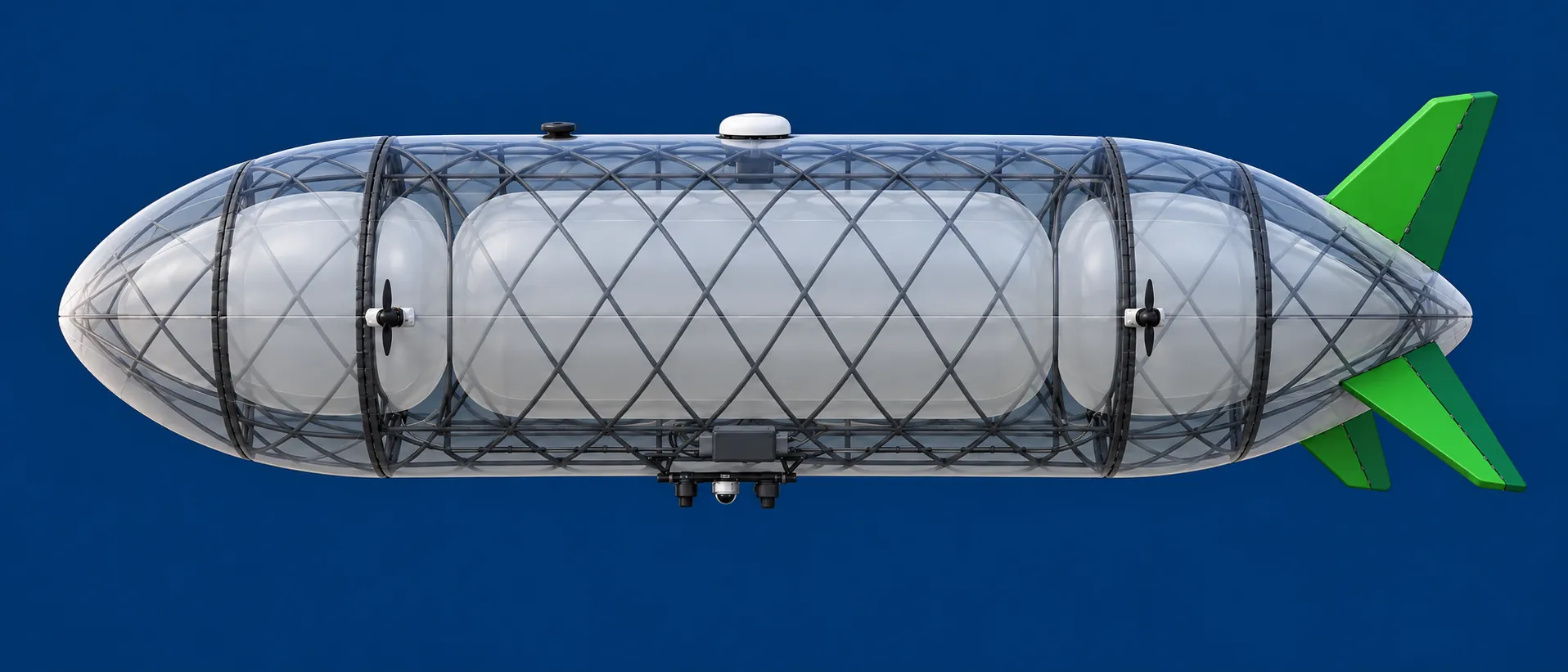
Select a numbered point to see how the X-11 works.
 AI concept visual
Feature 01 / 06
Rigid carbon lattice frame
Helical and hoop ribs form a stiff lattice that holds the hull shape at any fill level. Every frame variant passed nine load cases in finite-element analysis before selection.
SimulatedFeature 02 / 06
Gas cells
The lifting gas sits in separate cells inside the frame at near-ambient pressure, physically separated from avionics and wiring.
Design specFeature 03 / 06
Vectoring pods (×4)
Each motor sits at the end of a carbon tube that rotates to point its thrust forward, up or down. Together they control surge, heave, pitch, roll and yaw.
Bench-testedFeature 04 / 06
Y-tail fins
Three fins in a Y (one up, two down at 45°) keep the airship stable in cruise and add steering authority as airspeed builds.
Bench-testedFeature 05 / 06
Payload bay
A payload bay under the hull carries the customer payload with power and data connections, up to 15 kg.
Design specFeature 06 / 06
Avionics and satellite link
The autopilot with our control allocation, a Galileo receiver with HAS and OSNMA, a 5G modem and a satellite back-up terminal.
Design specDetails
Up close.
 AI concept visual
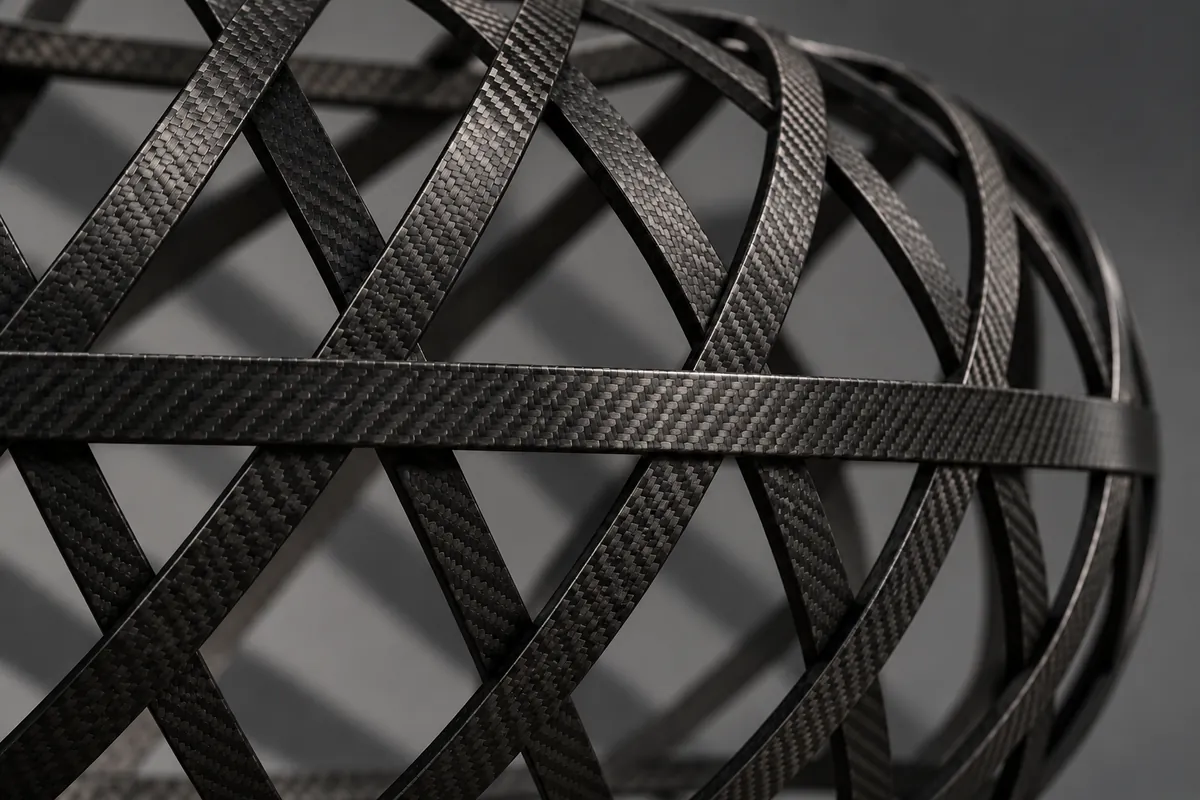
Carbon lattice
Helical and hoop ribs in carbon fibre form the frame that keeps the hull rigid.
 AI concept visual
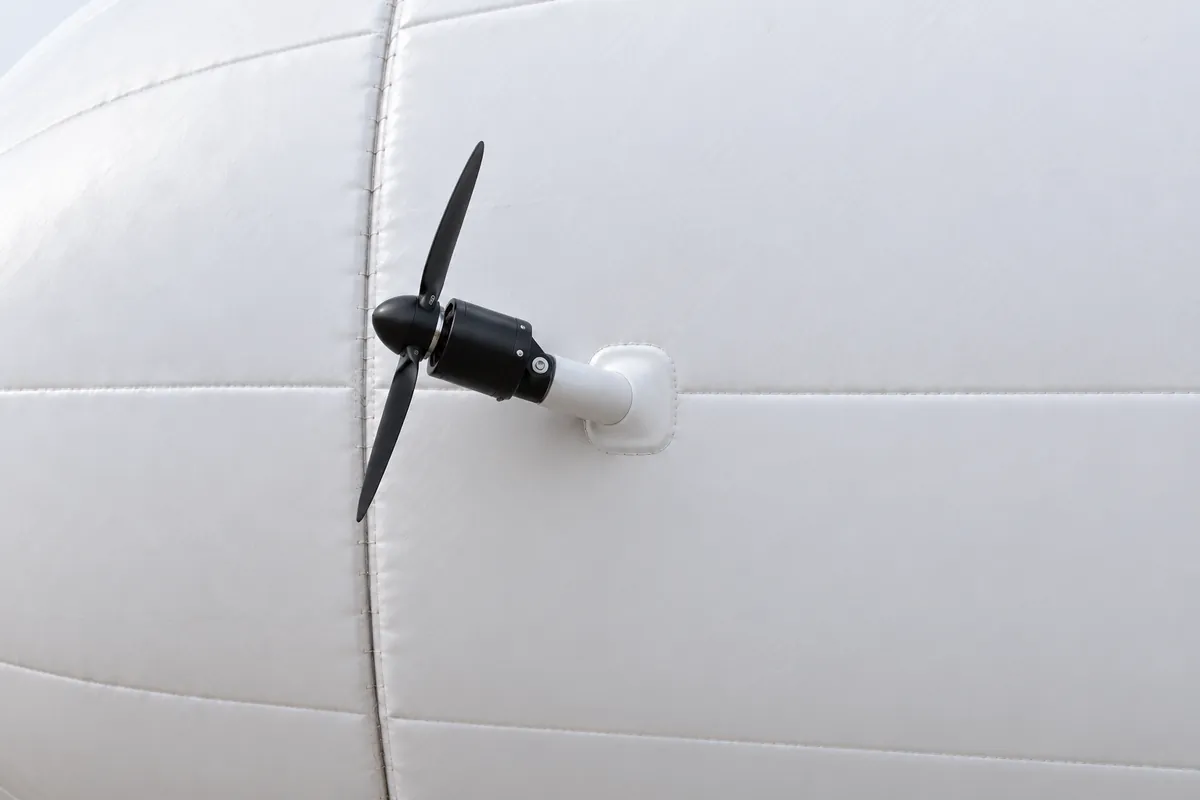
Vectoring pod
Each of the four pods tilts its propeller to push forward, up or down.
 AI concept visual
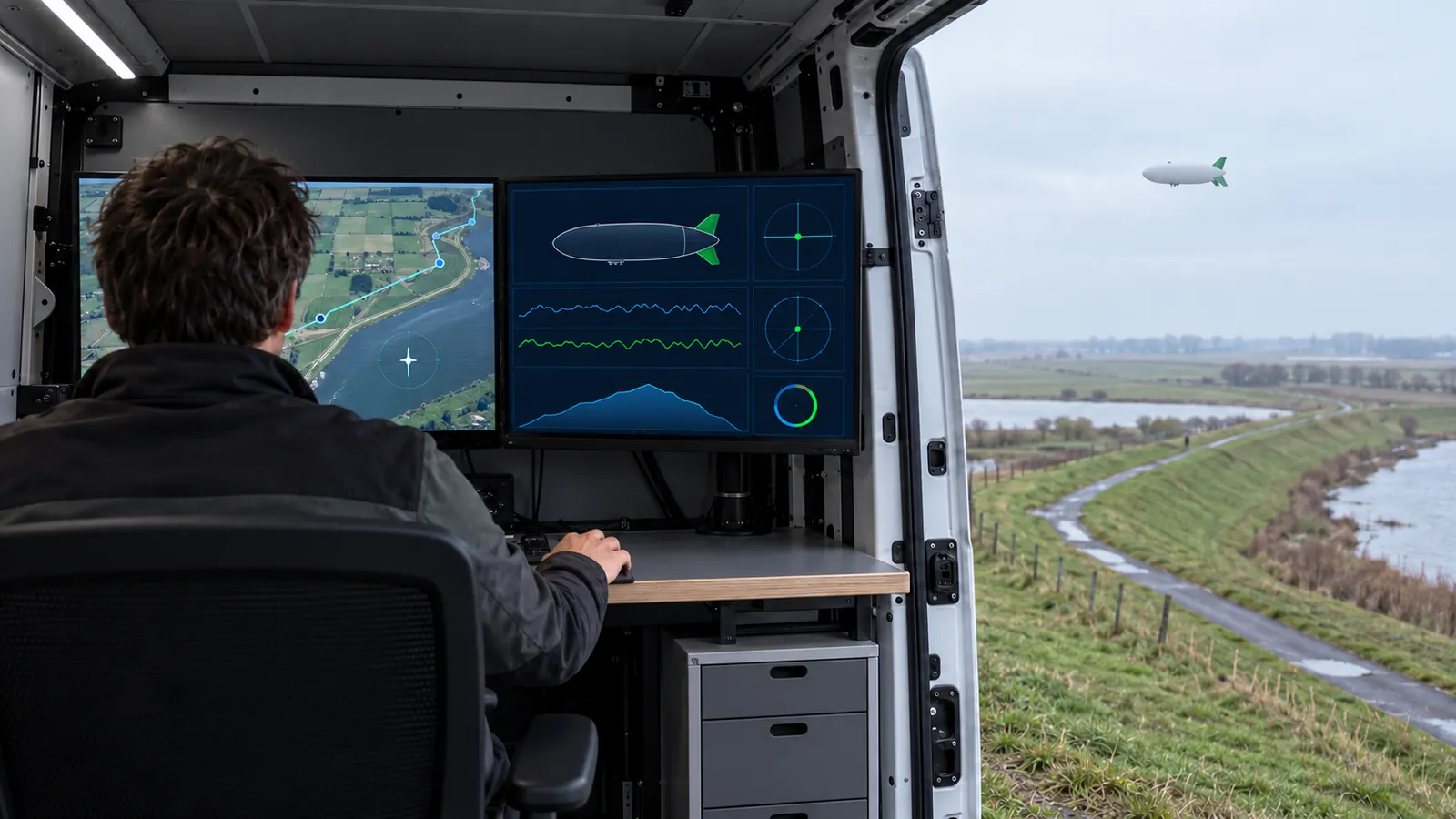
Mobile ground station
A remote operator follows the mission from a van at the route, with a ground handler when needed.
Autonomy
Planned missions, flown automatically.
An industry-standard open autopilot runs on a proven flight controller. Our own control allocation shares every command between the four vectoring propellers and the three fins. Waypoint missions, station keeping, a geofence and a link-loss failsafe are in development.
Bench-testedSilent hover
Holding position quietly.
At low speed, the four vectoring propellers hold position and attitude on their own, turning slowly. That keeps noise down when the airship holds position over a target.
Bench-testedConnectivity and positioning
Space-enabled operations.
Radio, 5G and satellite
Command and data run over radio and the 5G mobile network. A satellite terminal on board the X-11 is the back-up channel where coverage drops.
Design specGalileo HAS and OSNMA
20 cm-class corrections without local base stations, and authenticated position and time that protect against spoofing.
Design specSatellite weather data
Weather data in mission planning and rerouting, so the airship avoids conditions outside its limits.
Design spec AI concept visual
Virtual test campaign
389 analyses before the first cut.
245 frame variants across 81 hull geometries, each checked against the same nine flight and ground load cases.
Simulated- finite-element analyses
- 389
- frame variants
- 245
- hull geometries
- 81
- load cases passed
- 9